web 2.0
Showing posts with label news. Show all posts

Monday, December 19, 2011

FDA Warning: Questions and Answers on HCG Products for Weight Loss

1. What action are the Food and Drug Administration (FDA) and the Federal Trade Commission (FTC) taking against human chorionic gondatropin (HCG) drug products marketed for weight loss?

FDA and FTC are issuing seven joint warning letters to firms marketing over-the-counter (OTC) HCG drug products that are labeled as homeopathic for weight loss.  The firms are receiving these letters because they are violating the Federal Food, Drug, and Cosmetic Act and the Federal Trade Commission Act by selling unapproved new drugs and misbranded drugs that make unsubstantiated claims about weight loss.

These unapproved “homeopathic” HCG drug products are marketed OTC on websites and in retail stores, and can be in the form of oral drops, pellets, and sprays.  FDA has not evaluated these products for safety or effectiveness.

FDA and FTC will monitor the firms’ responses to the warning letters and take further action as needed.  Firms that do not correct the violations may face enforcement action, possible legal penalties, or criminal prosecution.

2. What is HCG?

Human chorionic gonadotropin (HCG) is a hormone produced by the human placenta and found in the urine of pregnant women.  HCG is FDA-approved for the treatment of select cases of female infertility and hormone treatment in men. FDA-approved HCG products are only available in injection-form and require a prescription from a licensed medical professional.

There are no FDA-approved HCG products for weight loss.

3. Why is FDA concerned about the use of homeopathic HCG drug products marketed for weight loss?

Currently, there are no FDA-approved HCG drug products for weight loss.  HCG has not been demonstrated to be effective therapy in the treatment of obesity.  There is no substantial evidence that HCG increases weight loss.

Additionally, the labeling for the “homeopathic” HCG products states that each product should be taken in conjunction with a very low calorie diet (VLCD).  Consumers on a VLCD are at increased risk for side effects including gallstone formation, electrolyte imbalance, and heart arrhythmias.  A VLCD should only be used under proper medical supervision.

4. Which homeopathic HCG products and manufacturers/distributors are affected?
The following table provides the products and manufacturers/distributors that are the subjects of this action.  This is not an all inclusive list of illegal “homeopathic” HCG products currently on the market.  At this time, all drug products claiming to include “homeopathic” HCG are illegally marketed.   

Manufacturer/Distributor Name
Product Name
HCG Diet Direct, LLCHCG Diet Homeopathic Drops
HCG 1234 LLC (The hCG Drops LLC)Homeopathic HCG
HCG Platinum LLC; RightWay NutritionHCG Platinum
HCG Platinum X-30
HCG Platinum X-14
Nutri Fusion Systems LLCHCG Fusion 30
HCG Fusion 43
www.resetthebody.com; www.theoriginalhcgdrops.comHomeopathic Original HCG
Homeoapthic HCG
Hcg-miracleweightloss.comHCG Extra Weight Loss Homeoapthic Drops
Natural Medical SupplyAlcohol Free hCG Weight Loss Formula

5. Are prescription HCG products safe and effective for weight loss?  

No. FDA-approved uses for prescription HCG products include female fertility and select hormonal treatment in males, and FDA has not approved prescription HCG for any other uses, including weight loss..  Current scientific evidence does not support the claim that HCG is safe and effective for weight loss or for the treatment of obesity.  In fact, FDA labeling for the approved HCG drug products requires the following statement about the use of HCG for weight loss:
“HCG has not been demonstrated to be effective adjunctive therapy in the treatment of obesity.  There is no substantial evidence that it increases weight loss beyond that resulting from caloric restriction, that it causes a more attractive or ‘normal’ distribution of fat, or that it decreases the hunger and discomfort associated with calorie-restricted diets.”
FDA is aware that healthcare professionals sometimes prescribe prescription injectable HCG for unapproved uses such as weight loss.  FDA understands that sometimes approved products are used to treat conditions that the products were not approved for (i.e., “off-label” uses).  The “off-label” use of products usually presents greater uncertainty about both the risks and benefits because less information is available on safety and effectiveness.  Unexpected adverse events may occur in this context.  FDA has received reports of serious adverse events associated with the use of HCG injections for weight loss including cases of pulmonary embolism, depression, cerebrovascular issues, cardiac arrest, and death.

 6. What should consumers do?    
               
FDA advises consumers who are using “homeopathic” HCG for weight loss to stop using the product, to stop following any labeled dieting instructions, and to discard the product.  Consumers who suspect they have experienced adverse effects as a result of the use of HCG drug products for weight loss should contact a licensed health care professional immediately. 

FDA urges both health care professionals and consumers to report harmful effects experienced from using HCG for weight loss to the FDA’s MedWatch Adverse Event Reporting program by doing one of the following:
  • Complete and submit the report online: www.fda.gov/MedWatch/report.htm
  • Download form or call 1-800-332-1088 to request a reporting form, then complete and return to the address on the pre-addressed form, or submit by fax to 1-800-FDA-0178
-
Share/Bookmark

Monday, November 7, 2011

Tap Water Is Cleaner Than Bottled Water (And Other Shocking Facts)

Today, as I stood in line at the grocery store, watching the woman in front of me haul a huge case of bottled water up to the conveyor belt, I felt that familiar twinge…a combination of frustration and confusion.

All I could think about was those 24 unnecessary bottles ending up in the landfill. And the unnecessary oil it took to make the bottles. And the unnecessary mess that was made while extracting the oil.

“Why, why, WHY?” I wondered. Why would you pay for bottled water every week when perfectly good water flows out of every faucet in your house?!

And then it dawned on me. The answer was right there on the packaging. “Purified water.” One of the biggest reasons people buy and drink bottled water is because they think it’s cleaner than tap water.
But 40 percent of all bottled water in the U.S. is actually taken from municipal water sources. Bottled water companies are literally bottling up the same water that comes out of your faucet, jacking up the price and laughing all the way to the bank.

Also disturbing is the fact that far less testing is done on bottled water than on tap water. It turns out that unlike tap water, bottled water isn’t tested for e. coli. And it can be distributed even if it doesn’t meet the quality standards of tap water. Unlike tap water, bottled water isn’t required to produce quality reports or even provide its source.

Feeling that anger and confusion yet? Scroll on to learn more.

The Facts About Bottled Water
 

-

Share/Bookmark

Thursday, October 20, 2011

Foods masquerading as drugs- False Health Food Claims


Big food companies have taken to making so many health claims about their products lately that it can be hard to tell a supermarket from a pharmacy.
Yogurts say they will improve immunity and digestion. Cereals, milk and breads with omega-3 fats claim that they'll help kids' brains develop and unclog grown-ups' arteries. And then there are all those drinks that say they will give you energy, help you sleep and even protect you from the sun.
"We're going through a revolution in food," says Thomas Pirko, president of Bevmark consulting, whose clients include Coca-Cola and Kraft. "It's a whole new consciousness--every product has to be adding to your health or preventing you from getting sick."
Foods masquerading as drugs are a booming $31 billion business in the U.S. alone, according to market researcher Packaged Facts. Designer yogurts alone generate $4 billion in revenue. But a Forbes special report on this booming industry raises big concerns about how many of these claims are backed up by any evidence at all. Even as they are a big growth area for companies like General Mills, Pepsi ( PEP -news - people ), Nestle, Unilever and Coca-Cola.
Most of the claims "are completely unsubstantiated," says Steven Nissen, head of cardiology at the Cleveland Clinic. "Medical attention does not come from a Cheerios box."
In Europe it is much tougher for food companies to make health claims. The European Food Safety Authority has rejected 80% of more than 900 proposed claims over the past several years because they are lacking strong evidence. But the Food and Drug Administration does not prospectively review food claims because American law says that foods are allowed to affect the "structure and function" of the body, so long as they do not actually claim to treat disease.
This leaves consumers to figure out for themselves what works and what doesn't. It can be tough. For instance, in a newly released study of 638 children, Georgetown University researchers found that DanActive, a yogurt made by French multinational company Danone, reduced everyday infections by 19%. But it didn't keep the kids from missing school.
But another yogurt-like product, ProBugs kefir from Lifeway Foods, utterly failed to prevent antibiotic-associated diarrhea in another study by the same researchers. Lifeway told Forbes it thinks the researchers made mistakes in the study, and that it wants the to redo the study before it will pay Georgetown's bills. But the company continues to make vague health claims for its product.
It's not easy to tell the foods that help a little from those that may do nothing. POM Wonderful pomegranate juice cites all sorts of studies on everything from prostate health to erectile dysfunction; unless you are a scientific sophisticate who likes to read the fine print you probably wouldn't notice that its largest study in heart patients failed.
Even omega-3 fatty acids that are added to foods can be a source of confusion. Docosahexaenoic acid (DHA) from fish oil protects the heart and may even help brain development . But other omega-3s being put in foods have less evidence behind them--and there may be no way of telling which you are getting from the package label.
Things get even murkier when drinks are classified as nutritional supplements, not beverages. That's how Sarpes Beverages can make claims that its DreamWater helps you sleep (it also contains a warning for pregnant women), and how Nestle ( NSRGY.PK - news -people ) can claim its Glowelle protects against sun damage based on a tiny 56-patient study. The same goes for FRS Healthy Energy, the antioxidant drink pitched by Lance Armstrong.
"It's the marketing folks within these companies that make the decisions, not scientists," says University of Georgia researcher Kirk Cureton, who has done studies finding that the FRS energy drink doesn't boost performance. "When the marketing people decide what they want to say, they go and try to find some evidence to back it up."
Some experts recommend a different strategy for health: Don't look for sexy health claims or newfangled additives. Says University of Wisconsin cardiologist James Stein: "People should be getting nutrition from real foods, not from foods that are artificially modified to give supposed health benefits."
 -


Share/Bookmark

Big Tobacco companies now go after our Children through food


Did you know that in 2001 the world’s largest tobacco company, Philip Morris, purchased some of the most popular children’s processed-food brands, including Oreo cookies, Riztz crackers & Life Savers candies.  This makes Philip Morris, which produces everything from Oscar Mayer bacon to Post cereals, the world’s second largest food company after Nestle, Inc.  Again, it IS all about the bottom line & right now making our children fat & unhealthy will make these companies “Fat & Happy”.

-
Share/Bookmark

Tuesday, October 18, 2011

H1N1 Rap by Dr. Clarke


Share/Bookmark

Sunday, October 16, 2011

Nasty Bugs Lurking on Your Cell Phone

Study: E. coli Found on Cell Phones the Result of Poor Hand Washing
red cell phone
Oct. 14, 2011 -- The next time you reach for your cell phone, consider this: A new study found that 92% of cell phones in the U.K. have bacteria on them - including E. coli -- because people aren't washing their hands after going to the bathroom.

The E. coli came from fecal bacteria, which can survive on hands and surfaces for hours.
Researchers from the London School of Hygiene & Tropical Medicine and Queen Mary, University of London looked at cell phones in 12 cities in the U.K.

They took 390 samples from cell phones and hands, which were then analyzed for germs. People were also asked about their hand hygiene.

Phone Filth and Other Facts

The study found:
  • 92% of phones had bacteria on them.
  • 82% of hands had bacteria on them.
  • 16% of hands and 16% of phones had E. coli bacteria, which is found in feces.
However, 95% of people said they washed their hands with soap where possible, which suggests we have a tendency to lie about our hygiene habits.

"We're pretty shocked to find the vast majority of mobile phones -- 92% -- had bacteria all over them. Often large numbers of bacteria,” said hygiene expert Val Curtis, PhD, of the London School of Hygiene & Tropical Medicine.

"That isn't necessarily something that we should worry about, but what is worrying is that 16% of mobile phones had E. coli on them. E. coli comes from human [and animal] feces,” she says. "That means that people with dirty hands are not washing their hands after using the toilet, for example. Then they're handling their mobile phones.”

It’s not just cell phones that the dirty hands are touching, Curtis says.
"They're also touching other surfaces as well,” she says. “They're spreading fecal bugs on everything they touch really."

Toilet Texting?

Is there a more worrying way the phones are getting contaminated -- by people using them while they're in the bathroom?

"We didn't ask people whether they'd used their phones in the toilet. That might be something that would be interesting to study," Curtis says. "People do tend to use their mobile phones everywhere they go. Perhaps we should discourage their use in the toilet."

So is having unclean hands a modern-day problem linked to our new technology?

"Humans have had infections since before they were human. It's a really ancient problem," she says. "Bugs are evolutionary masters at getting from person to person.”

Anything that you touch can become a source of infection, Curtis says. So hand washing after using the toilet is crucial.

Excuses, Excuses

Curtis says people can be quick to excuse their nasty habits.

"They say that they're in a hurry, they say that the water's too cold. People don't actually feel that their hands have got contaminated.

"Everyone knows they should do it, so it's not education that's the answer. We need to find other ways to remind people that it's disgusting that their hands are dirty and their hands get smelly and foul after the toilet,” she says. "Disgusting people with the state of their hands is probably the most effective way of getting people to wash their hands."
-
Share/Bookmark

Wednesday, October 5, 2011

Many 'natural' foods are loaded with GMOs

(NaturalNews) Weed killer is thriving biologically inside most conventional crops as they grow in the fields of America, only to be sprayed with more heavy doses of Roundup, and then shipped to the world's supermarkets as "all natural," with absolutely no GMO disclaimer or warning. Even vegetarian products have been infiltrated by this cancer-causing "Trojan horse."

Corn and soy based products infiltrate the American "norm" for daily general consumption, and the healthcare industry loves the results. Hundreds of thousands of Americans are suffering from infections, serious gluten allergy reactions, headaches, dizzy spells, kidney stones, bowel irregularities, and worst of all, mutagenic cell production leading to cancer. Monsanto's GMO farm land has increased from just 4 million acres in 1997 to over 330 million acres now, most of which is United States soil. Brazil and India are now popular GMO breeding grounds also.

Veggie burgers are no exception, so no more of that for your vegetarian cookouts. Forget about all the soy-based items that are boxed, bagged and bottled in the center aisles of the grocery store. The only place where you should be looking for food in the grocery store is around the outer walls, where the fresh fruits and vegetables are being rinsed. There's no safety in numbers anymore, and the FDA is grasping for straws, constantly changing the names of poisons as more and more educated consumers know where the toxins are and how to read the tricky labels.

Over 93% of all U.S. soy products are Monsanto GMO, which are carcinogenic. Stop eating the following: vegetable oil, lecithin (an emulsifier), soy protein concentrates, tofu (soybean curd), soy sauce, teriyaki and tamari sauce, soy flour, soy nuts, soy nut butter, soy isoflavones, soy milk, hydrolyzed vegetable protein (HVP), hydrolyzed soy yeast, soy-based infant formulas, non-dairy frozen yogurt, and soy isolate fiber (SPF). Soy protein isolates, containing up to 92 percent protein, possess the most dangerous amount of "highly refined protein" of all soy products.

Over 86% of all U.S. corn products are Monsanto GMO and are carcinogenic. If you haven't watched the documentary King Corn, it's a must see. The Bush Administration subsidized this GMO food devil the infamous high fructose corn syrup, for ethanol, and also to serve as feed for livestock, which gives animals digestive infections.

Cows are not evolved enough to digest corn, especially Monsanto GMO cancer causing corn, and as soon as corn products become their main diet, farmers must give them antibiotics to fight off digestive infections. That's how the whole cycle of drugs and meat perpetuates.

Stop eating corn starch, corn chips, baking powder, caramel (made from corn syrup), confectioner's sugar, corn flour, corn gluten, corn syrup, corn meal, corn oil, dextrose, dextrin, maltodextrin (synthetic thickening agent), food starch, modified food starch, fructose, gum arabic, GDL (additive in cured meats), invert sugar, invert syrup, malt syrup and extract, mono and di-glycerides, monosodium glutamate (MSG - popular in Chinese foods), sucrose, treacle (mixture of molasses and corn syrup), vegetable protein, vegetable shortening, and of course, xantham gum. If you like corn, eat organic corn on the cob.

Canola oil is GMO and is carcinogenic. It was never meant for human consumption. It comes from the rapeseed plant and is an excellent insect repellant. Canada paid off the FDA to label it as safe. It has been known to disrupt the central nervous system, cause respiratory illness, constipation, low birth weights in infants, and even lung cancer. Canola is not just another oil to choose from. The only reason Canada promotes this is because it is one of the nation's chief export products.

Also watch out for tomatoes, potatoes, beets and alfalfa that are not truly organic. Stick with grocery stores like Trader Joes and your local farmers markets. True organic food prices are coming down quickly now that the word is getting out about GMO corn and soy, and about the labels that are often lies, like "all natural" and "natural flavors added."

Textured vegetable protein, or TVP, is a meat substitute made from soy flour and comes in small flakes or large chunks. This ground meat-looking staple product isn't suitable for animals, much less humans, but the recipe tells you to add it to your favorite soup, chili or pasta sauce. TVP is in most storable foods.

Use olive oil or coconut oil for cooking, and fill your refrigerator and pantry with 100% organic everything. Until you can remember all of the poisons, print this page and put it in your wallet or purse so you'll have it handy at the stores. Change your eating habits now and you will feel the difference immediately, and your body will reward you with renewed energy and vitality.

Sources for this article include:
-

Share/Bookmark

Thursday, September 29, 2011

Prescription drugs responsible for more deaths than traffic accidents, study finds

(NaturalNews) Every 14 minutes, a person is killed by prescription drugs -- and unlike most other causes of preventable death, which have been on the decline for years, medication-induced deaths are on the upswing across the US. According to a recent analysis conducted by the Los Angeles Times (LA Times), drug-induced deaths have become so prevalent that their average yearly total now exceeds the number of deaths caused by traffic accidents.

It is truly a sad day in the world when the very medications prescribed for treating disease are one of the leading causes of death, including among young children. And based on data retrieved by the LA Times, the number of drug fatalities has doubled within the past ten years, as legal drugs now kill nearly 38,000 Americans every single year -- and these are just the deaths about which we know.

Prescription painkillers like OxyContin, Vicodin, Xanax, Soma, and new-drug-on-the-block Fentanyl -- Fentanyl, which comes in the form of patches and lollipops, is 100 times strong than morphine -- are largely responsible for the uptick in drug deaths. Individuals both young and old, many of whom are specifically prescribed these drugs by their doctors for pain or anxiety, are increasingly overdosing on them, according to reports.

The tragic reality of the situation is that otherwise normal individuals, many of whom had no prior history of drug abuse or addiction, become hooked on prescription drugs. When the effects of one drug begins to lose its potency, many patients begin combining them with others just to maintain the same high they had before -- and the end result is often death.

"The problem is right here under our noses in our medicine cabinets," Laz Salinas, a sheriff's commander in Santa Barbara, Cal., is quoted as saying in the LA Times report.

Prescription painkillers, mentions the report, killed 15-year-old Nolan Smith of Aliso Viejo, Cal., back in 2009, as well as a 19-year-old Army recruit, a groom at a wedding, a teenage honor student, and even both parents of a young child. In other words, common individuals of all ages are now dying on a regular basis as a result of Big Pharma's rampant dispensation of toxic poisons peddled as "medicine."

And since as little as one percent of drug-induced injuries and deaths are even reported in the US Food and Drug Administration's (FDA) adverse event tracking system, the actual number of drug deaths is likely far higher than what has been publicly released. Based on 2008 data from an Institute for Safe Medication Practices (ISMP), estimates suggest that as many as half a million Americans die every year from taking pharmaceutical drugs (http://www.naturalnews.com/024632_drug_drugs_death.html).

Sources for this story include:

http://www.latimes.com/news/la-me-drugs-epidemic-20110918,0,3660682.story
-
Share/Bookmark

12 Unfathomable Obesity Stats [Make you want to cry]


Interactive Map for 2010
 
Trust for America’s Health (TFAH) and the Robert Wood Johnson Foundation (RWJF) have released their annual report on obesity, and there’s no sunshine here. The report is aptly titled F as in Fat: How Obesity Threatens America’s Future 2011 [download PDF].

The report is released every year (since 2006) and tracks obesity rates in all 50 states. The stats below make us want to cry. Seriously, we’re headed down a path of pain and agony for tens of millions of families, and for this entire nation.

1. Adult obesity rates rose in 16 states over the past year. NOT EVEN ONE state decreased.

2. Twelve states, led by the southeast, now have obesity rates above 30 percent: Alabama, Arkansas, Kentucky, Louisiana, Michigan, Mississippi, Missouri, Oklahoma, South Carolina, Tennessee, Texas, and West Virginia.

3. Just 4 years ago, one state was above 30%.

4. Obesity rates exceed 25% in more than two-thirds of states (38 states).

5. Mississippi had the highest rate of obesity at 34.4%.

6. Colorado had the lowest rate at 19.8% . It is the only state with a rate below 20% (but next year will probably be above)

7.  Adult diabetes rates increased in 11 states and Washington, D.C. in the past year. In eight states, more than 10% of adults now have type 2 diabetes.

8. Education matters. High school dropouts have the highest rates of obesity (32.8%).

9. Money matters. Households that make less than $15,000 have a 33.8% obesity rate. Households that have an income above $50,000 have “only” a 24.6% obesity rate.

10. Over the past 15 years, seven states have doubled their rate of obesity. Another 10 states nearly doubled their obesity rate, with increases of at least 90%.

11. Over the past 15 years, diabetes rates have doubled in ten states. In 1995, only four states had diabetes rates above 6%. Now, 43 have diabetes rates over 7% and 32 have rates above 8%.

12. Ten years ago, no state had an obesity rate above 24%, and now 43 states have higher obesity rates than the state that was the highest in 2000.

Here’s what needs to be done:
A) The government must recognize we are in a state of emergency and act accordingly. Many more people are dying and suffering from the obesity epidemic than in any terror attack on this country.

B) While physical activity is important, part of healthy living, the main driver of obesity is excess food consumption. Let’s all agree on that, despite what soft drink company lobbies say.

C) Subsidies for corn and soy should be transferred immediately to fruits and vegetables. Junk food should be expensive, healthy food should be cheap.

D) Kids must not be exposed to junk food and fast food marketing.

E) Food companies must be beholden to a much higher standard when it comes to “health claims” and nutrition labeling.

Now, to all of you who are going to pull the “Nanny State” card, get a grip. This is not about people having free choice versus excess government intervention. This is about much needed public policy to protect consumers. No corporate self regulation will ever do that.

By Fooducate
-
Share/Bookmark

Monday, August 22, 2011

Food of the Week- Cabbage

Cancer prevention tops all other areas of health research with regard to cabbage and its outstanding benefits. More than 475 studies have examined the role of this cruciferous vegetable in cancer prevention (and in some cases, cancer treatment). The uniqueness of cabbage in cancer prevention is due to the three different types of nutrient richness found in this widely enjoyed food. The three types are (1) antioxidant richness, (2) anti-inflammatory richness, and (3) richness in glucosinolates.
What's New and Beneficial About Cabbage
  • Cabbage can provide you with some special cholesterol-lowering benefits if you will cook it by steaming. The fiber-related components in cabbage do a better job of binding together with bile acids in your digestive tract when they've been steamed. When this binding process takes place, it's easier for bile acids to be excreted, and the result is a lowering of your cholesterol levels. Raw cabbage still has cholesterol-lowering ability-just not as much as steamed cabbage.
  • Researchers now realize that different types of cabbage (red, green, and Savoy) contain different patterns of glucosinolates. This new knowledge means that your broadest health benefits from cabbage are likely to come from inclusion of all varieties in your diet.
  • Cabbage in general-but also Savoy cabbage in particular-turns out to be an especially good source of sinigrin. Sinigrin is one of the cabbage glucosinolates that has received special attention in cancer prevention research. The sinigrin in cabbage can be converted into allyl-isothiocyanate, or AITC. This isothiocyanate compound has shown unique cancer preventive properties with respect to bladder cancer, colon cancer, and prostate cancer.
  • In one recent study, short-cooked and raw cabbage were the only types of cabbage to show cancer-preventive benefits-long-cooked cabbage failed to demonstrate measurable benefits.
  • New research shows that steaming is a better cooking method than microwaving if you want to maximize the health benefits of glucosinolates found in cabbage. That's because two minutes of microwaving destroys the same amount of myrosinase enzymes as seven minutes of steaming, and you need those myrosinase enzymes to help convert cabbage's glucosinolates into cancer-preventive compounds.

Share/Bookmark

Friday, August 5, 2011

Cantaloupes Sold at Sam's Club Recalled

Eagle Produce, LLC of Scottsdale, Ariz., has announced a limited recall of certain cantaloupes shipped from Arizona to upstate New York in late May, due to their potential to be contaminated with salmonella. Although no illnesses have been reported, Eagle Produce has voluntarily decided to recall the potentially affected shipments, which were sold at Sam’s Club between June 2 and June 17. Sam’s Club has withdrawn all cantaloupes from the stores and sent a notification to members that bought these melons from clubs served by the Johnstown, N.Y. and Pottsville, Pa., distribution centers.

Salmonella is an organism which can cause serious and sometimes fatal infections in young children, frail or elderly people, and others with weakened immune systems. Healthy persons infected with salmonella often experience fever, diarrhea (which may be bloody), nausea, vomiting and abdominal pain. In rare circumstances, infection with salmonella can result in the organism getting into the bloodstream and producing more severe illnesses such as arterial infections (i.e., infected aneurysms), endocarditis and arthritis.

The recall is limited to approximately 1,760 cartons of cantaloupes, each containing nine melons, for sale in bulk, in brown cardboard cartons each with the Kandy logo in white with the word 'Cantaloupes' in white lettering on a red background. The cartons have the lot code 147 count 9 printed on the side of the carton. Each melon bears a Kandy sticker with the words 'Cantaloupe USA'.

The recall is being implemented as a result of a routine and random test directed by the USDA and carried out by the New York Department of Agriculture. The company has ceased the production and distribution of the product in question.

Consumers who believe that they are in possession of uneaten cantaloupes affected by this recall may contact Eagle Produce at 480-323-6177 Monday through Friday 8 a.m. to 5 p.m. Arizona time.
Share/Bookmark

Ground turkey linked to 1 death, 76 illnesses, CDC says

Federal officials say one person has died from salmonella poisoning that appears to be linked to eating ground turkey, but the government so far has declined to say who produced the meat or initiate a recall.
salmonella-outbreak-map.jpgView full sizePersons infected with the outbreak strain of Salmonella Heidelberg, by state as of August 1, 2011
 
Seventy-six people in 26 states have been made sick from the same strain of the disease, which the federal Centers for Disease Control and Prevention says is resistant to many commonly prescribed antibiotics. The CDC did not say where the person who died became sick and released no details about the death.

The illnesses date back to March, and the CDC said Monday that cultures of ground turkey from four retail locations between March 7 and June 27 showed salmonella contamination. The agency said preliminary information showed that three of the samples have been linked to the same production establishment but did not name the retailers or the manufacturers.

The Agriculture Department oversees meat safety and would be the agency to announce a recall. The department sent out an alert about the illnesses late last week telling consumers to properly cook their turkey, which can decrease the chances of salmonella poisoning. But the department has not given consumers any further warnings about the source of the tainted meat.

The USDA has not responded to requests for comment on why there has not been a recall. The CDC said it and the USDA were "vigorously working to identify the specific contaminated product or products that are causing illnesses and will update the public on the progress of this investigation as information becomes available."

Food safety advocate Bill Marler, an attorney who has represented victims of the nation's biggest food-borne illness outbreaks, said he believes the three positive samples should prompt a recall.
"Consumers have no idea what to do except not eat ground turkey," he said.

The illnesses are spread all over the country. The states with the highest number sickened were Michigan and Ohio, 10 illnesses each, while nine illnesses were reported in Texas. Illinois had seven, California six and Pennsylvania five.

The remaining states have between one and three reported illnesses linked to the outbreak, according to the CDC: Alabama, Arizona, Georgia, Iowa, Indiana, Kentucky, Louisiana, Massachusetts, Minnesota, Missouri, Mississippi, North Carolina, Nebraska, Nevada, Oklahoma, Oregon, South Dakota, Tennessee and Wisconsin.

The CDC said 26 states were affected but only listed 25 states in which illnesses were reported in a news release issued Monday evening.

A chart on the CDC's website shows cases have occurred every month since early March, with spikes in May and early June. The latest reported cases were in mid-July, although the CDC said some recent cases may not have been reported yet.

University of Pennsylvania bioethicist Art Caplan said the government's handling of the outbreak raises ethical questions about why the public wasn't warned sooner.

"You've got to protect the public health. That's their first and primary value — not industry, not any other goal. They have to warn as quickly as they think there's reasonable evidence for concern," Caplan said.

He said that uncertainty about the outbreak's source might explain the long silence, but added, "the moral duty is to really get the word out as soon as you have evidence of a problem."

CDC spokeswoman Lola Russell said Tuesday it can take three to four weeks to confirm one case. Identifying an outbreak can take considerably longer than that when cases of foodborne illness occur sporadically, in several states, as has happened in the current outbreak, shel said.

Russell said the CDC isn't advising the public to avoid eating ground turkey, but does urge people to cook it properly.

Ground turkey is considered safe to eat when the internal temperature reaches 165 degrees. For turkey patties or burgers, internal temperatures on each side should be measured.

Other government advice:
—Refrigerate raw meat and poultry within two hours after purchase, one hour if temperatures in the house exceed 90 F.
—Refrigerate cooked meat and poultry within two hours after cooking.
—Wash hands with warm, soapy water for at least 20 seconds before and after handling raw meat and poultry.

The CDC estimates that 50 million Americans each year get sick from food poisoning, including about 3,000 who die. Salmonella causes most of these cases and federal health officials say they've made virtually no progress against it.

The most common symptoms of salmonella are diarrhea, abdominal cramps and fever within eight hours to 72 hours of eating a contaminated product. It can be life-threatening, especially to those with weakened immune systems.

One of the largest outbreaks last year involved salmonella-tainted eggs that may have sickened as many as 56,000. About 2,000 illnesses were reported, but CDC estimates that only a fraction of illnesses are reported in most outbreaks.


-
Share/Bookmark

Wednesday, July 20, 2011

Sign of Hope? Fast Food Chains Launch “Kids Live Well” Menu Items

The National Restaurant Association has just launched a program called “Kids Live Well” that includes changes to kiddie meals being served by 19 franchises in over 15,000 locations across the country. The list includes big chains like IHOP, Burger King, and Denny’s.

So what are the improvements?

To join “Kids LiveWell,” restaurants agree to offer and promote a selection of items that meet qualifying criteria based on leading health organizations’ scientific recommendations, including the 2010 USDA Dietary Guidelines. The criteria include the following components:

- Offer a children’s meal (an entrée, side and beverage) with 600 calories or less; two servings of fruit, vegetables, whole grains, lean protein and/or low-fat dairy; with limits on sodium, fats and sugar;

- Offer at least one other individual item with 200 calories or less, with limits on fats, sugars and sodium, plus contain a serving of fruit, vegetables, whole grains, lean protein or low-fat dairy;

- Display or make available upon request the nutrition profile of the healthful menu options; and

- Promote/identify the healthful menu options.

Here is an example: At Burger King, the default kid combo when ordering a burger used to be fries and soft drinks. Going forward parents will be asked what they prefer for their child. Maybe apple slices and milk. Or juice.

Will this move help the fight against obesity?

Probably not. But for families on road trips this summer with only fast food options when stopping along the freeway, there may be some slight nutritional relief.

According to Margo Wootan of the Center for Science in the Public Interest:

Most restaurants already offer one or two healthy choices—but they are present amidst a minefield of high-calorie, salty, high-fat options.

Which means it is still much easier for parents (and the kids) to opt for the greasier choice, rather than the healthier one. Let’s admit it, who wants to eat mealy apple slices compared to a fresh batch of hot fries?

Bottom line: Kids Live Well is a nice PR move by the industry. It does not require massive menu changes by restaurants so it was cheap to implement. Regardless, if employees and parents will now be slightly more aware that at least one good choice awaits, the campaign has some redeeming value.

By Fooducate
-
Share/Bookmark

First Lady: Let's Move Fruits And Veggies To 'Food Deserts'

Today, first lady Michelle Obama announced that several major retailers, foundations and small businesses have committed to bringing healthier food to neighborhoods where supermarkets are scarce.


But she knows it's not going to be easy. If you have kids, you know that given the choice of Kit-Kats or kiwis, kids will pick usually pick the candy. But today's target is the parents living in so-called "food deserts."

"If a parent wants to pack a piece of fruit in a child's lunch... they shouldn't have to take three city buses," Mrs. Obama said during a press conference today.

As part of her Let's Move campaign, the First Lady wants to help families make better choices — especially the 23.5 million Americans living in largely urban, low-income areas where access to healthy food can be spotty.

The White House Task Force on Childhood Obesity has identified this challenge of bringing more nutritious, affordable foods to so-called food deserts as one of the key pillars to solving the epidemic.

"We can give people all of the information in the world about healthy eating... but if parents can't buy the food they need to prepare those meals... if their only options for groceries are in the corner gas station or the local mini mart, then all of that is just talk... and that's not what Let's Move is about," she said.

The new initiative builds on a pledge announced in January with Walmart. The nation's largest food retailer says it knows firsthand how important access to good food is. "We will use our position to reduce the cost of an increase access to healthy foods," wrote Chad Mitchell on the Walmart community blog.

Walmart pledged today to open up to 300 stores in food deserts by 2016, but other giant retailers are involved, too. Walgreens says it will start offering whole fruits and vegetables, SUPERVALU is building 250 new stores, and various smaller groups are joining forces and money in the effort.

The White House admits that no single initiative is a magic bullet. And the goal of melting some inches off our collective waistline is complicated.

Consider the study published last week in the Archives of Internal Medicine, which blames the easy access to fast food options for obesity problems, rather than a lack of stores selling healthy food.

Yet another recent study from the University of Maine finds easy access to junk food doesn't appear to affect students' body mass index.

But making the healthy stuff easier to get may be a good start.
Share/Bookmark

Wednesday, July 6, 2011

Weighing cancer risks, from cellphones to coffee

You’re sitting in a freshly drywalled house, drinking coffee from a plastic foam cup and talking on a cellphone. Which of these is most likely to be a cancer risk?

It might be the sitting, especially if you do that a lot.

Despite all the recent news about possible cancer risks from cellphones, coffee, styrene, and formaldehyde in building materials, most of us probably face little if any danger from these things with ordinary use, health experts say. Inactivity and obesity may pose a greater cancer risk than chemicals for some people.

“We are being bombarded” with messages about the dangers posed by common things in our lives, yet most exposures “are not at a level that are going to cause cancer,” said Dr. Len Lichtenfeld, the American Cancer Society’s deputy chief medical officer.

Linda Birnbaum agrees. She is a toxicologist who heads the government agency that just declared styrene, an ingredient in fiberglass boats and Styrofoam, a likely cancer risk.

“Let me put your mind at ease right away about Styrofoam,” she said. Levels of styrene that leach from food containers “are hundreds if not thousands of times lower than have occurred in the occupational setting,” where the chemical in vapor form poses a possible risk to workers. “In finished products, certainly styrene is not an issue,” and exposure to it from riding in a boat “is infinitesimal,” she said.

Carcinogens are things that can cause cancer, but that label doesn’t mean that they will or that they pose a risk to anyone exposed to them in any amount at any time.

They have been in the news because two groups that periodically convene scientists to decide whether something is a carcinogen issued new reports.

Last month, the International Agency for Research on Cancer, part of the World Health Organization, said there is a possibility cellphones raise the risk of brain tumors.

“The operative word is ‘possibility,’” said Lichtenfeld, who among others has pointed out the thin evidence for this and that cancer rates have not risen since cellphones came out.

Last week, the National Toxicology Program, part of the National Institute of Environmental Health Sciences – both of which Birnbaum heads – issued its report.

It adds to the list of known carcinogens formaldehyde, which is in building materials and some hair-straightening products, though Birnbaum said on-the-job exposure is the main concern. The list also adds a plant substance in some “natural” arthritis remedies, aristolochic acid. Six other things were dubbed “reasonably anticipated” to be carcinogens, including styrene and another herbal medicine ingredient, riddelliine.

Since 1971, the international cancer agency has evaluated more than 900 substances. Just over 100 have been deemed carcinogens, 59 are called probable carcinogens, and 266 others are possible ones.
Known carcinogens include alcoholic beverages, estrogen treatments for menopause symptoms, birth control pills, certain viruses and parasites, and even some drugs used to treat cancer, such as cyclophosphamide and tamoxifen.

“Most people would probably be shocked to see the number of things they interact with every day” on these lists, Lichtenfeld said.

Here’s the problem: The agencies that pass judgment on a carcinogen don’t regulate it or determine what levels or routes of exposure are a concern and for whom.

Copyright 2011 Associated Press. All rights reserved. This material may not be published, broadcast, rewritten, or redistributed.


Share/Bookmark

Saturday, May 21, 2011

Infographic: Obesity in America

NaturalSociety


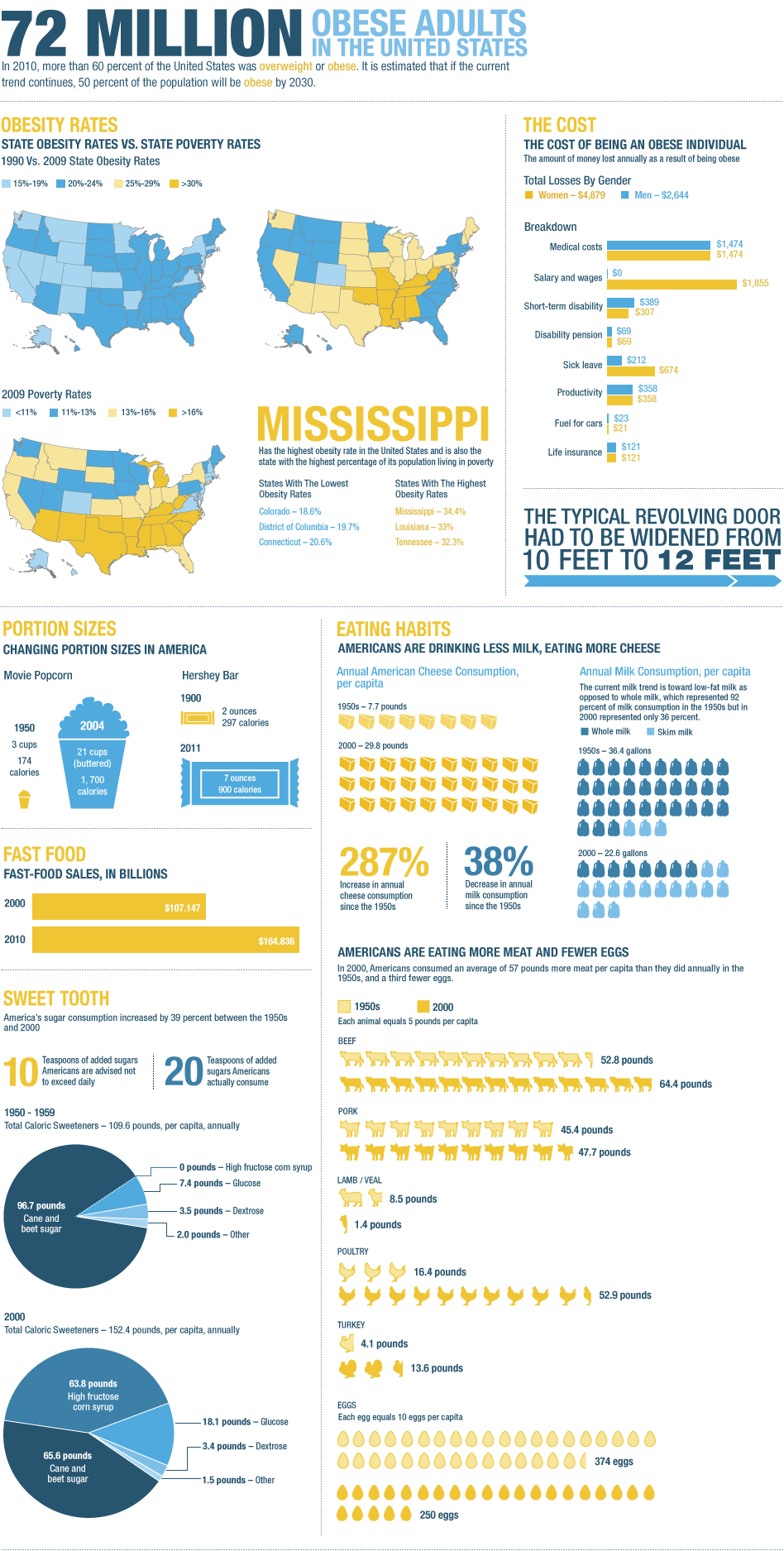
With obesity on the rise in the United States, a number of things are changing. Not only are portion sizes growing astronomically along with artificial sweetener consumption, but society is changing as well. Take a look at the informational photo (an “infographic”) and take in the astounding statistics about obesity in America. Click for a larger size.
Source: Centers for Disease Control and Prevention; U.S. Department of Agriculture (USDA); U.S. Census Bureau; “A Heavy Burdon,” George Washington University, 2010; “Why Are We So Fat?,” National Geographic, August 2004, Volume 206, Issue 2

-
Share/Bookmark

Monday, May 9, 2011

New FTC Proposals, the End of Marketing Junk Food to Kids?

By Fooducate

Consider these 3 frightening facts:

1. The food industry spends close to $2 Billion a year advertising foods to kids
2. Cookies and cakes, pizza, and soft drinks are the top sources of calories in the diets of children 2 through 18.
3. Chips and french fries comprise half of all the vegetables kids eat.

Somebody’s got to do something, right?

Last week, the Federal Trade Commission published a proposal with guidelines for marketing food to children. This, part of a cat and mouse game with the junk food industry, trying to limit kids’ exposure to commercials for foods and beverages of low to negative nutritional value.

The proposal was put forth by the Interagency Working Group on Food Marketed to Children (Working Group), comprised of representatives from the Federal Trade Commission (FTC), the Centers for Disease Control and Prevention (CDC), the Food and Drug Administration (FDA), and the United States Department of Agriculture (USDA).

Here are 2 principles they’ve put together, which in theory sounds fantastic:

A - Foods marketed to children must make a meaningful contribution to healthful diets, and contain at least one of the healthy food groups: fruits & veggies, whole grains, low fat or fat free dairy, fish, extra lean meat, eggs, nuts & seeds, beans

B - foods should minimize intake of nutrients that could have a negative impact on health or weight. For example, 0 trans-fat.

The proposals are now entering a “waiting for comments from the public” phase, where we can all say our piece, but mostly lobbies for the foods industry will.

As expected, food advertising agencies have already warned:

If companies were to comply with these proposals, the restrictions are sufficiently onerous that they would basically block a substantial amount of advertising.

Duh. That’s the whole point!

Before we congratulate the inter-office working group on these proposals, let’s remind ourselves that there is no legal obligation for the food industry to follow these proposals once they are formally adopted by the government in 2016 (5 years! Boy the government works slowly).

No matter what the government regulators do get approved, creative marketers will always find a way to get to our kids. And with so many technology based options to touch kids these days (facebook, youtube, video games) don’t doubt for a second that children will continue to be exposed to massive amounts of junk food ads before they can even spell Froot Loops.

So your best bet is to fooducate your kids from an early age about the meaning of advertising and commercials, and help them critically view messages aimed at them.

-
Share/Bookmark

Wednesday, April 27, 2011

Airplane Food Gets Even More Revolting

By Fooducate, by Chef Rob Endelman.

As if airline food isn’t awful enough, those still eating the carriers’ meals (when offered) now have unsanitary conditions on the aircraft themselves to worry about.

The following is an excerpt from a warning letter the Food and Drug Administration sent to Delta Airlines a few weeks ago:

To comply with 21 CFR 1250.30(a), all places where food is prepared, served, or stored shall be constructed and maintained as to be clean and free from flies, rodents, and other vermin. However, our investigator observed the following evidence of rodent activity on your aircraft:

•Approximately 8-11 rodent excreta pellets above the right door panel in the forward galley (G1) where food is prepared by flight personnel;

•Approximately 10-20 rodent excreta pellets above the left door panel in the forward galley (G1) where food is prepared by flight personnel;

•Approximately 9-15 rodent excreta pellets on the right aisle of the aircraft over seats C3-C7;

•Rodent excreta pellets (too numerous to count) in three areas in ceiling panels located in the middle cross over galley G2, which is directly over places where food and drinks are stored in the aircraft; and

•Mammalian urine in six areas on ceiling panels located in the middle cross over galley G2.

Our laboratory analysis of samples collected during the inspection confirmed the presence of rodent excreta pellets and rodent urine stains in the aircraft.

Instead of relying on the airlines’ food, here are some ideas for easy-to-make meals that work great for air travel:

•Sliced chicken breast sandwich with avocado, cheese, tomato, lettuce, mustard. Feel free to substitute sliced steak for chicken or leave out meat for vegetarian version.

•Sautéed or raw vegetables and (pick a protein) over brown rice or quinoa.

•Whole wheat pasta with meat sauce. (It’s better than you think at room temperature.)

What are your favorite carry-on airplane meals?

-
Share/Bookmark

Sunday, March 20, 2011

Can vitamin D supplements prevent respiratory infections?

ConsumerReportsHealth.org

Vitamin D clearly helps build and maintain strong bones. And in recent years a number of articles have suggested, though not proved, that insufficient levels of the vitamin are also linked to everything from breast cancer and tuberculosis to depression and multiple sclerosis. Now a new study adds some more evidence for the vitamin’s role in preventing respiratory infections such as sinusitis and pneumonia to the list.

In the study, published this month in the Journal of Infectious Diseases, Finnish researchers divided a group of 164 young male military recruits into two groups. Half received a placebo and half got 400 international units (IU) of vitamin D. After six months, there was no difference between the groups in the percentage of people who reported symptoms, such as a cough, runny nose, or sore throat. But those who received the vitamin D supplement were significantly less likely to have missed duty because of respiratory infections than those who got a placebo.

Although more convincing studies are needed, what I found particularly interesting was the improved outcome with a fairly low dose of 400 IU a day. Last year, the Institute of Medicine raised the recommended levels of vitamin D to 600 IU a day for most adults and 800 a day for those 70 and older. Some experts recommend even higher amounts, up to 3,000 IU a day for people living in areas such as the Northeast, where people might not be able to make enough of the vitamin from exposure to ultraviolet light.

I would hesitate to recommend those higher doses, since the risks are still unclear, especially in patients with heart disease. Instead, I would stick with the new IOM guidelines. Of course, the best way to get vitamin D is through dietary sources, such as fortified milk and fatty fish such as salmon or sardines. Limited exposure to sunlight can also provide vitamin D, but talk with your doctor first, to assess your risk of skin cancer. Testing can make sense if you have symptoms your doctors suspects might be related to low levels of vitamin.

—Joseph Mosquera, M.D., is a board-certified physician also trained in integrative medicine, and a ConsumerReportsHealth.org adviser


Share/Bookmark

Friday, February 25, 2011

Cell phone radiation alters brain activity

From the:  Environmental Working Group

Washington, D.C. – A team led by Dr. Nora D. Volkow, a pioneering brain imaging scientist who heads the National Institute on Drug Abuse,has reported that cell phone radiofrequency radiation alters brain activity in human subjects.

The study, published by the prestigious Journal of the American Medical Association, is the first investigation to document changes in brain glucose metabolism after cell phone use. In a video accompanying the report, Volkow said the team focused on how the brain consumes glucose because "It's a very sensitive marker to indicate if there are changes in brain activity that may be driven by a given stimulus, which in this case was the cell phone."

The conclusion, according to Volkow: "Even though the radio frequencies that are emitted from current cell phone technologies are very weak they are able to activate the human brain to have an effect."

To see the entire article: Link
Share/Bookmark